Cable Selection Guide
XLPE and PVC are widely used cable insulation materials, but they differ in thermal behavior, electrical performance, flexibility, processing and fire characteristics. Selecting the right material requires the complete cable design and installation environment.
Quick Answer
XLPE is a cross-linked thermoset material commonly selected for power cables because of its thermal and dielectric performance. PVC is a thermoplastic material widely used in building wire, control cable and low-voltage applications because it is versatile and economical. Neither material is automatically suitable for every fire, temperature or chemical environment.
Material Structure and Temperature
Cross-linking changes polyethylene from a melt-processable thermoplastic into a network structure that retains mechanical integrity at higher conductor temperatures. PVC softens when heated and its allowable operating temperature depends on the compound and standard. Typical ratings must never be assumed from the material name alone; check the cable standard, insulation compound and approved data sheet.
Electrical Performance
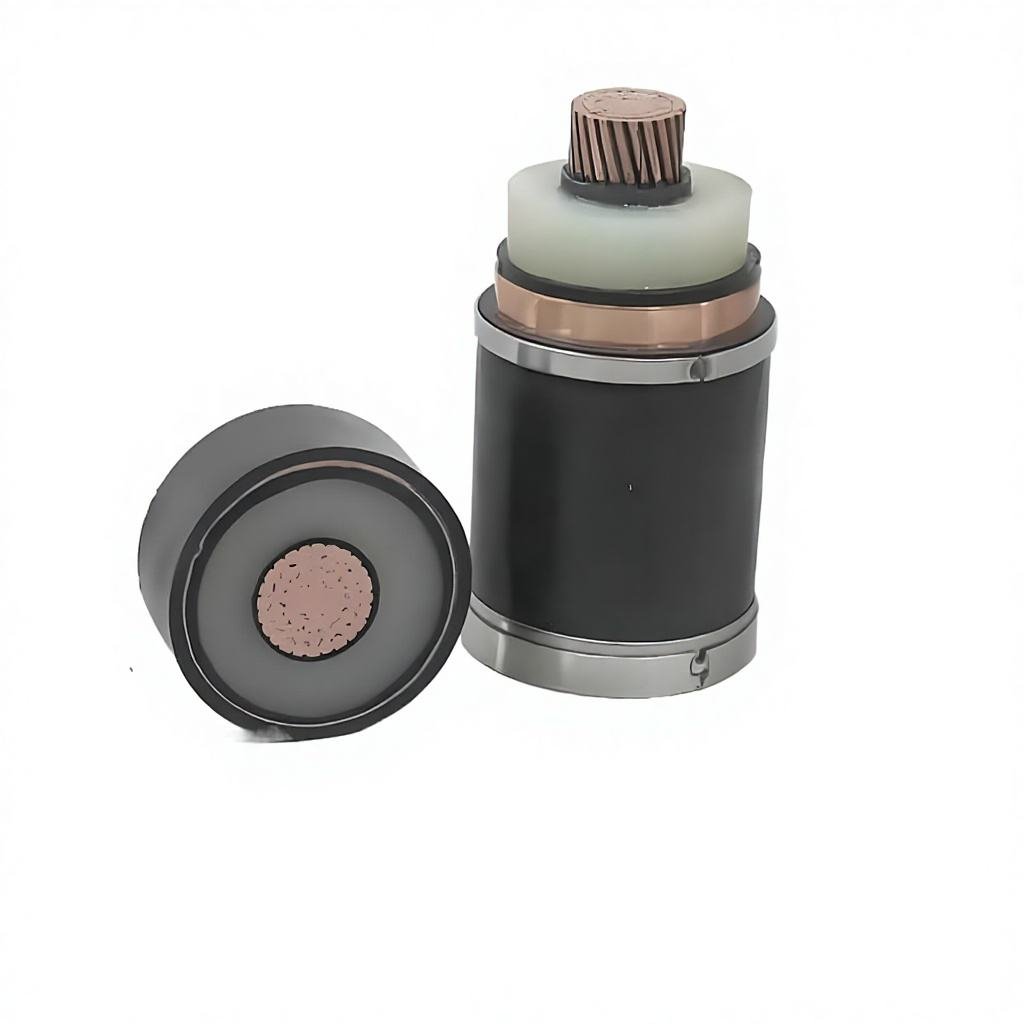
XLPE offers strong dielectric properties and is widely used in low-, medium- and high-voltage power cables. Its low dielectric loss supports screened MV designs. PVC performs well in many low-voltage wiring and control applications. Insulation thickness, conductor screen, insulation screen and testing are determined by the rated voltage and construction standard, not simply by choosing XLPE.
Mechanical and Environmental Factors
PVC compounds can be formulated for flexibility, oil resistance, flame performance and different temperature ranges. XLPE provides good thermal and mechanical performance but may still need a suitable outer sheath for moisture, sunlight, chemicals or abrasion. PE, PVC, LSZH and rubber sheath options serve different environments. Direct burial, ducts, trays, indoor risers and mobile service each create different requirements.
Fire Performance and Smoke
Standard PVC is not the same as low-smoke zero-halogen material. During fire, halogen-containing compounds can produce corrosive gases and smoke. LSZH compounds are chosen where smoke and acidity limits are important. XLPE insulation alone also does not establish a cable fire rating; the full insulation, bedding, filler and sheath system must pass the specified flame, smoke or circuit-integrity test.
Selection by Application
Choose the insulation together with rated voltage, conductor temperature, fault duty, bending, chemical exposure, fire strategy and local rules. XLPE is common for power distribution; PVC is common for building and control cables. EPR or rubber may be better where repeated flexibility is required. Review our LV XLPE power cable options before requesting a quotation.
Information to Send for an Accurate Quotation
State the cable model, voltage, conductor, cores, size, installation, normal and emergency temperature, fire-performance category, smoke or halogen requirement, oil/chemical exposure, armour, sheath, standard, quantity and destination.
Frequently Asked Questions
Is XLPE always better than PVC?
No. XLPE is advantageous for many power applications, while PVC can be appropriate and economical for building and control circuits. The standard and environment decide.
Is XLPE cable automatically fire-resistant?
No. Fire resistance is a tested performance of the complete cable construction, not a property established by XLPE insulation alone.
What does LSZH mean?
Low Smoke Zero Halogen describes material performance under specified tests. The exact test standard and limits must be stated.
Discuss Your Cable Requirement
Lulian Cable supports distributors, contractors, utilities and industrial buyers across Europe, the Middle East and Africa, including Nigeria. Final construction, standards and performance are confirmed in the approved quotation and technical data sheet.