§01 — STANDARD
Published 2026-09-09 · Technical explainer
IEC 60502-2 is the standard most medium voltage power cable is bought against. It covers extruded-insulated cables from 6 kV up to 30 kV, with a maximum system voltage Um of 36 kV, which is why 19/33 kV designs are normally specified under it while higher classes move to IEC 60840. Reading it as a buyer means knowing five things: the voltage designation, insulation thickness, which tests are routine and which are type tests, the partial discharge limit, and screen sizing.
The voltage designation: U0/U and Um
The marking reads U0/U (Um). U0 is the rms voltage between conductor and earth or metallic screen, U is the rms voltage between conductors, and Um is the highest system voltage the cable may be used on. A 6.35/11 (12) kV cable therefore has 6.35 kV to earth, 11 kV between conductors, and is intended for a system whose maximum voltage is 12 kV. U0 is the number that drives insulation thickness, and it is also the number that decides how long the cable can carry a single-phase earth fault before the insulation is stressed beyond its design.
Insulation thickness by voltage class
XLPE insulation is not scaled linearly with voltage; the standard fixes a nominal thickness per class and a minimum value no sample may fall below. Indicative nominal thicknesses are given below — confirm against the current edition and the manufacturer’s tables.
| Rated voltage U0/U (Um) kV | Nominal XLPE insulation thickness | Routine AC test on complete cable | Lightning impulse level (Um based) |
|---|---|---|---|
| 3.6/6 (7.2) | 2.5 mm | 3.5 U0 for 5 min | 60 kV peak |
| 6/10 (12) | 3.4 mm | 3.5 U0 for 5 min | 75 kV peak |
| 8.7/15 (17.5) | 4.5 mm | 3.5 U0 for 5 min | 95 kV peak |
| 12/20 (24) | 5.5 mm | 3.5 U0 for 5 min | 125 kV peak |
| 18/30 or 19/33 (36) | 8.0 mm | 3.5 U0 for 5 min | 170 kV peak |
Tests: what you receive evidence of
Routine test
Every drum length is subjected to an AC voltage of 3.5 U0 for five minutes on the completed cable. It proves the insulation survived manufacture and handling; it is not a design test.
Partial discharge
Measured at 1.73 U0, the discharge magnitude must not exceed 10 pC. This is the test that catches voids, contamination at the semi-conductive interface and screen defects that a withstand test alone would pass.
Impulse withstand
A type test applying the lightning impulse level for the cable’s Um at elevated conductor temperature. It verifies the cable survives switching and lightning transients on the system it is rated for.
Type and sample tests additionally cover conductor resistance to IEC 60228, thickness measurement, hot set testing for cross-linked compounds, shrinkage, bending and ageing checks.
§02 — THE SCREEN
Why the metallic screen cross-section deserves its own line in the specification
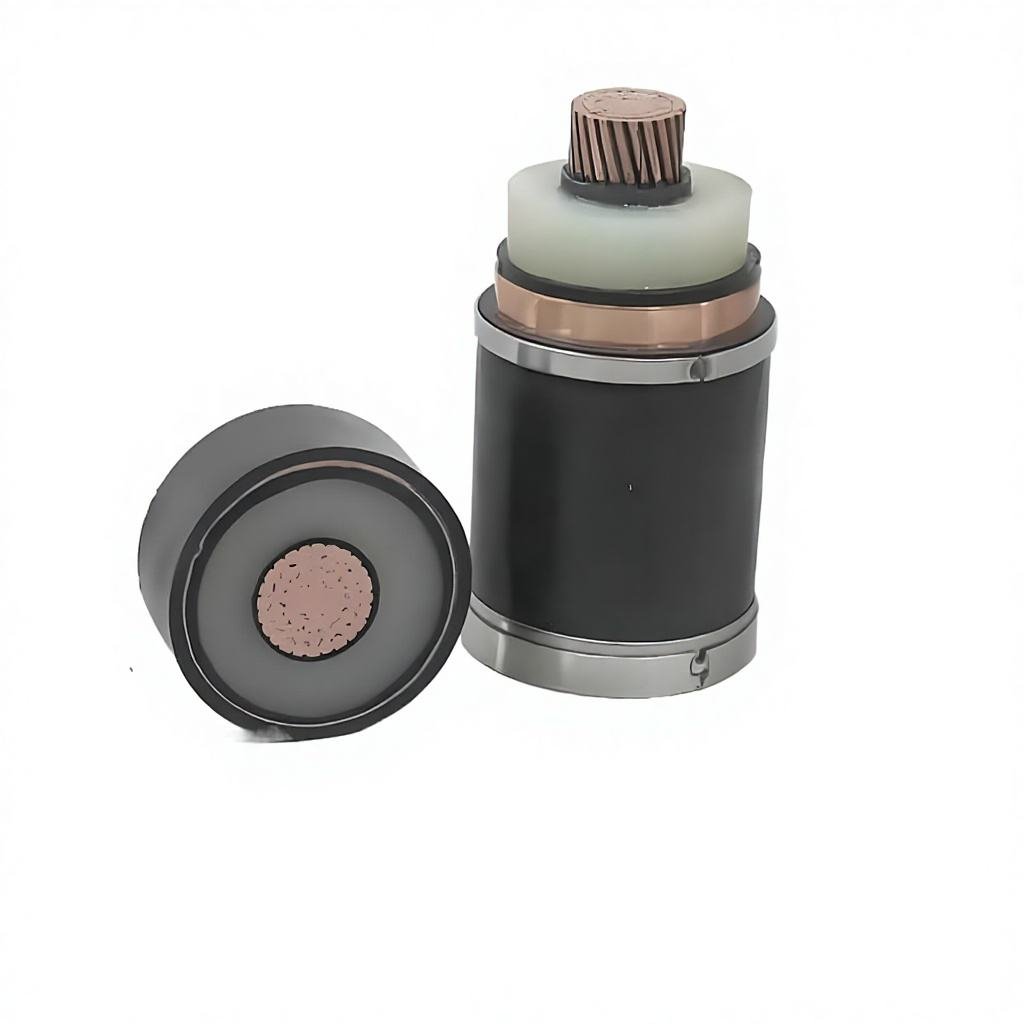
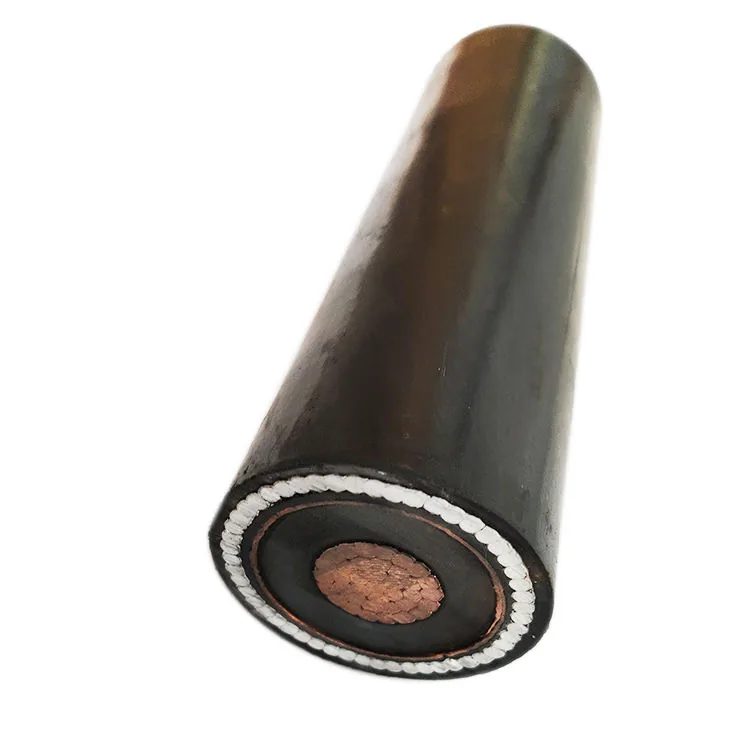
The conductor screen, insulation and insulation screen are extruded together as a triple layer, and the insulation screen is bonded to a metallic layer of copper wires, copper tape or a combination. That layer carries the charging current and, critically, the earth fault current. If its cross-section is too small for the network’s fault level and clearing time, the cable may pass every test in the works and still fail on the first earth fault. State the required fault current and duration and ask for the screen’s short-circuit rating in return.
Construction options at each class are set out in the medium and high voltage cable category, with per-class detail on 11 kV XLPE cable, 10 kV XLPE cable and 33 kV XLPE cable. For buried installations, the construction covered under YJV22 armoured power cable is the arrangement most distribution tenders ask for.
Designations, thicknesses and test levels here are indicative. The current edition of IEC 60502-2 and the manufacturer’s type test report govern any purchase.
§03 — FAQ
Reading a cable datasheet against IEC 60502-2
Is IEC 60502-2 the right standard for 33 kV?
Normally yes for 19/33 kV designs, because the standard’s scope extends to Um of 36 kV. Cables with a rated voltage above 30 kV U, or systems above Um 36 kV, fall under IEC 60840 instead. Confirm the edition, since national adoptions differ.
What does 3.5 U0 for 5 minutes actually prove?
That the completed drum has no gross insulation defect after manufacture. It is applied to every drum, so a test certificate should be traceable to the drum number you receive.
Why is partial discharge measured at 1.73 U0?
1.73 U0 is U0 multiplied by the square root of three, the phase-to-phase voltage. Testing at that level exercises the insulation at a service stress where voids and interface contamination begin to discharge.
Copper wire screen or copper tape screen?
Wire screens give a larger, more controllable cross-section for earth fault current, so they are preferred where fault levels are high. Tape screens suit lower fault level networks but must still be checked against the available fault current.
Which documents should I ask a manufacturer for?
A type test report to the stated edition of the standard, routine test certificates per drum, conductor resistance and construction data, and the screen short-circuit rating for your fault level and clearing time.