Cable Selection Guide
ADSS and OPGW both carry optical fibers on overhead power routes, but they perform different mechanical and electrical roles. ADSS is a separate all-dielectric self-supporting cable; OPGW is a metallic overhead ground wire containing optical fibers.
Quick Answer
Choose ADSS when an all-dielectric communication cable will be installed as a separate self-supporting line. Choose OPGW when the optical cable must also function as the transmission line shield or ground wire. Both require route-specific mechanical calculations, but OPGW additionally forms part of the electrical and lightning-protection system.
ADSS Construction and Role
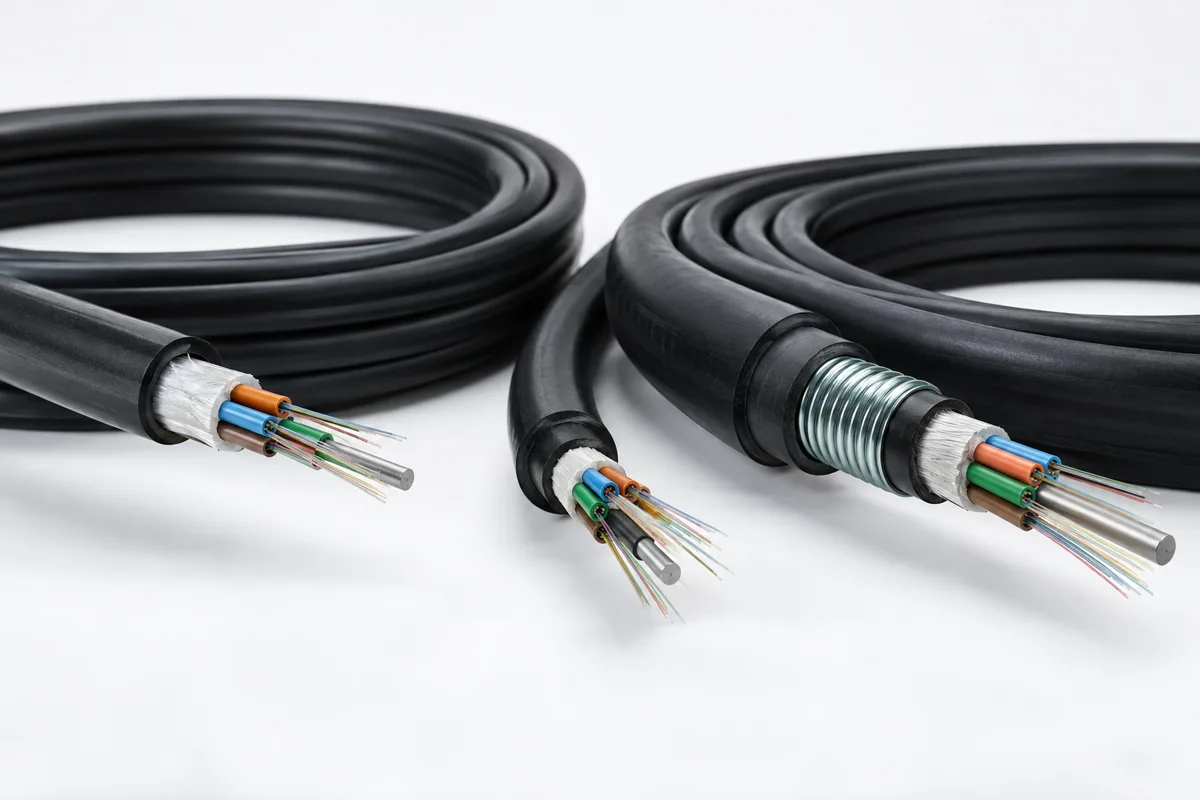
ADSS contains optical fibers, stranded strength members and protective sheaths without conductive metallic armour. Aramid yarn or equivalent strength elements carry the tensile load. The all-dielectric structure can simplify installation near energized lines, but the sheath and cable design must suit the electric-field environment, span and climate.
OPGW Construction and Role
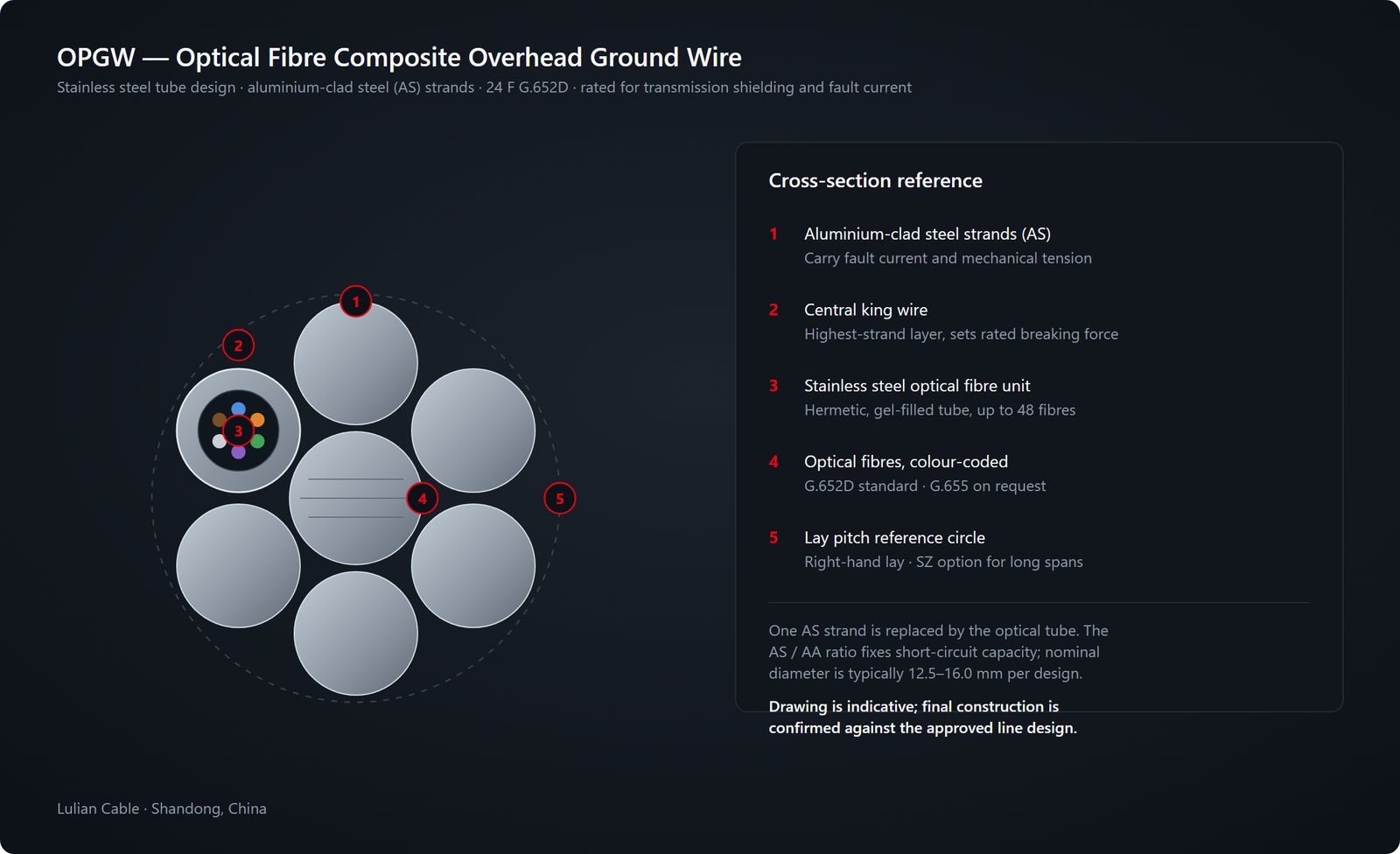
OPGW combines optical units with aluminium-clad steel, aluminium alloy or related metallic strands. Installed at the top of a transmission line, it provides the overhead ground-wire function while carrying communications. Electrical fault-current capacity, lightning performance, sag-tension behavior and hardware compatibility are essential design inputs.
Mechanical Design Inputs
Both products require span length, ruling span, sag, tension, wind speed, ice loading, temperature range, tower geometry and installation method. ADSS also requires assessment of electric-field space potential and dry-band arcing risk. OPGW design must coordinate with the existing ground wire, tower loads and fault-current duty. A model cannot be selected from fiber count alone.
Fittings and Installation
ADSS systems use suspension clamps, dead-end assemblies, vibration dampers, storage assemblies and down-lead clamps matched to cable diameter and tension. OPGW uses specialized suspension and tension hardware, grounding connections and joint boxes. Installation crews must control pulling tension, bend radius, twist and sheave diameter. Hardware schedules should be quoted with the cable.
Optical Requirements and Testing
Specify fiber type and count, attenuation, splice plan, optical unit, tensile performance, crush, temperature and test standard. Factory reports and drum OTDR traces may be requested. Route acceptance should include optical testing after installation. See our ADSS and OPGW product page.
Information to Send for an Accurate Quotation
Provide line voltage, route and span schedule, maximum span, tower geometry, wind and ice conditions, temperature range, required sag/tension data, fault current and duration for OPGW, electric-field information for ADSS, fiber type and count, hardware list, drum length, standard, quantity and destination.
Frequently Asked Questions
Can ADSS replace OPGW?
Not when the cable must provide the overhead ground-wire function. ADSS and OPGW have different electrical roles.
Can ADSS be installed on live lines?
Some projects use live-line methods, but safety, utility procedures, electric-field design, equipment and trained installation teams must be approved.
What data is most important for a quotation?
A span schedule and environmental loading are essential. For OPGW include fault current; for ADSS include line voltage and intended attachment position.
Discuss Your Cable Requirement
Lulian Cable supports distributors, contractors, utilities and industrial buyers across Europe, the Middle East and Africa, including Nigeria. Final construction, standards and performance are confirmed in the approved quotation and technical data sheet.