Cable Selection Guide
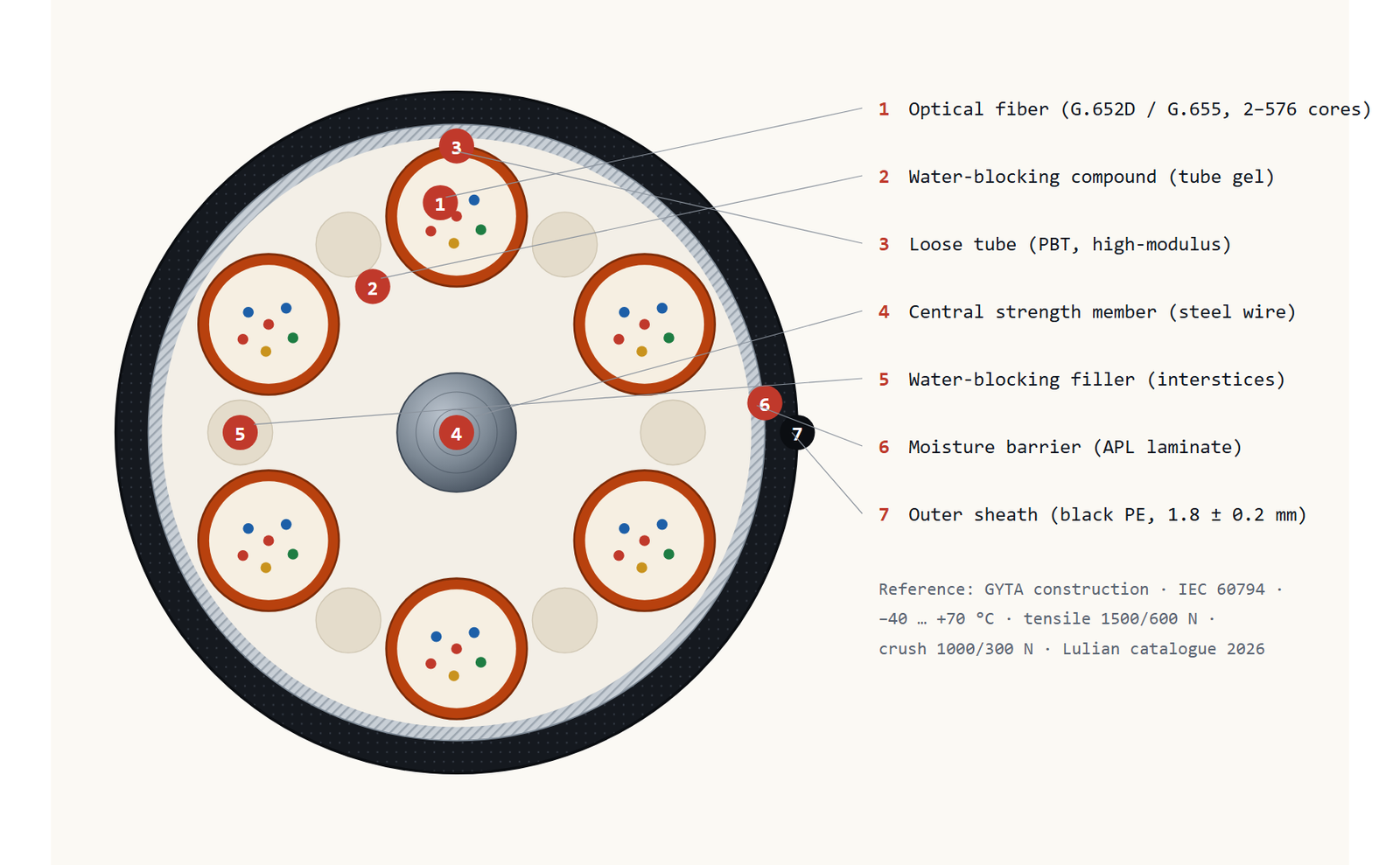
GYTA, GYTS and GYTA53 are outdoor stranded loose-tube fiber optic cable families with different protective layers. Their armour and sheath structures influence crush resistance, moisture protection and installation method.
Quick Answer
GYTA commonly uses an aluminium-polyethylene laminate beneath a PE sheath. GYTS commonly uses a steel-polyethylene laminate for increased crush protection. GYTA53 adds further armour and a double-sheath structure for demanding direct-buried routes. Exact construction and performance must be confirmed by the applicable standard and data sheet.
Shared Loose-Tube Design
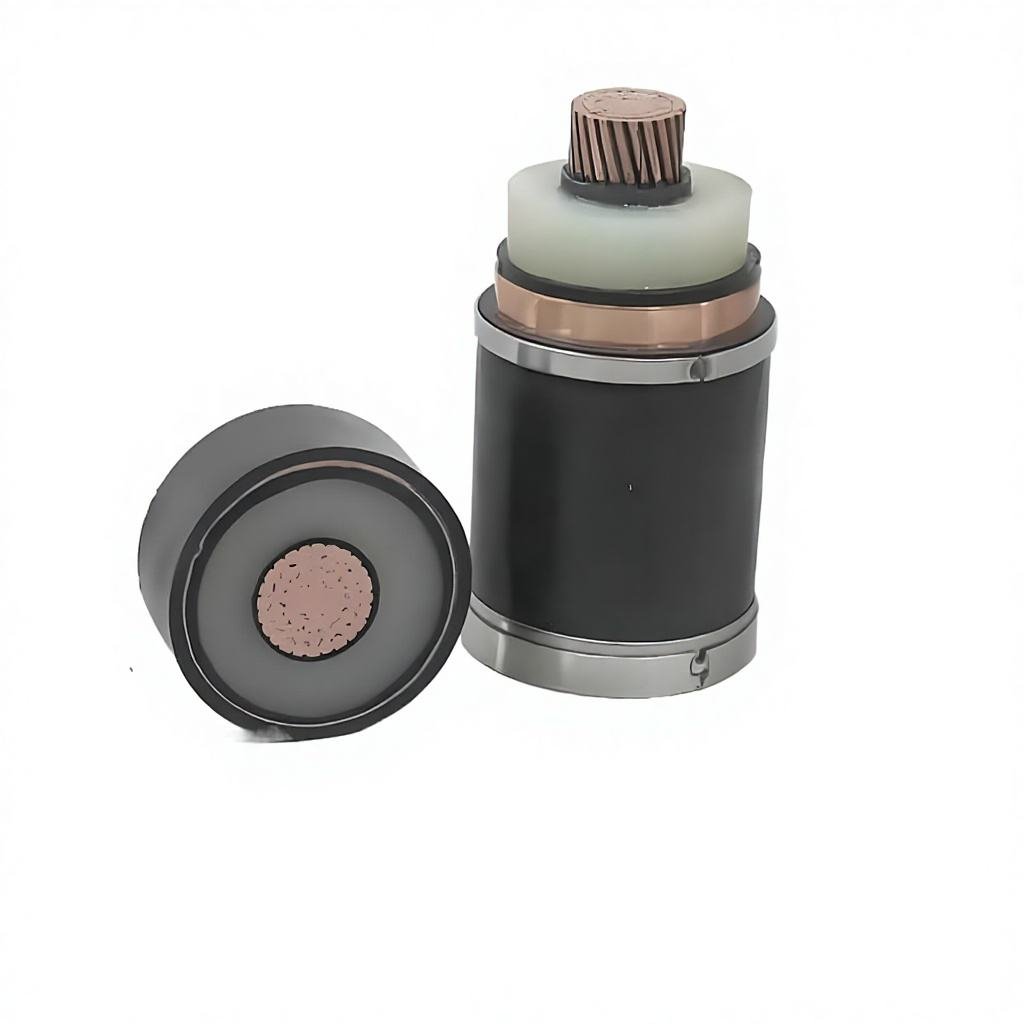
Optical fibers are placed in gel-filled or dry water-blocked PBT loose tubes and stranded around a central strength member. Fillers complete the circular cable core where required. Water-blocking elements protect longitudinally, and an outer polyethylene sheath provides environmental protection. Fiber type, tube count and fiber count vary by design.
GYTA Construction and Use
GYTA typically uses an aluminium-plastic composite tape bonded to the PE sheath. It is commonly selected for duct and outdoor installations where moisture protection and moderate mechanical performance are required. Because the aluminium laminate is not a heavy direct-burial armour, route conditions and local requirements must be checked before specifying it.
GYTS Construction and Use
GYTS typically replaces the aluminium laminate with a steel-plastic composite tape. The steel layer improves crush resistance and offers additional mechanical protection. It remains important to confirm tensile load, crush rating, rodent environment and installation method. Metallic elements must be considered where electrical isolation or lightning exposure is relevant.
GYTA53 Construction and Use
GYTA53 generally combines an inner sheath with corrugated steel tape armour and an outer PE sheath. The reinforced structure is widely used for direct burial and demanding outdoor routes. Bedding, trench quality, pulling tension, minimum bending radius and rodent risk still require engineering. Extra armour increases diameter, weight and drum size.
Optical and Mechanical Specification
State G.652D, G.657A or another fiber type; fiber count; attenuation; tensile and crush requirements; operating temperature; bending radius; water blocking; sheath; drum length and test standard. For aerial power routes, consider ADSS or OPGW instead. Explore our GYTA/GYTS/GYTA53 product page.
Information to Send for an Accurate Quotation
Provide model, fiber type and count, loose-tube arrangement, attenuation class, tensile load, crush resistance, bending radius, operating temperature, water-blocking method, armour, sheath, installation route, drum length, standard, quantity and destination.
Frequently Asked Questions
Which model is best for direct burial?
GYTA53 is commonly selected, but trench, rodent, moisture and mechanical requirements must be confirmed.
Does GYTS contain steel?
The common construction includes a steel-plastic laminate, but the approved technical sheet controls the final design.
Can these cables be installed near power lines?
Metallic elements require lightning and electrical-potential assessment. All-dielectric ADSS may be preferable for some aerial routes.
Discuss Your Cable Requirement
Lulian Cable supports distributors, contractors, utilities and industrial buyers across Europe, the Middle East and Africa, including Nigeria. Final construction, standards and performance are confirmed in the approved quotation and technical data sheet.